
What your floor is doing to your drawing sessions
How the floor under your desk shapes chair movement, lamp glare, spills and noise, and what to check before a new floor goes into your drawing room.
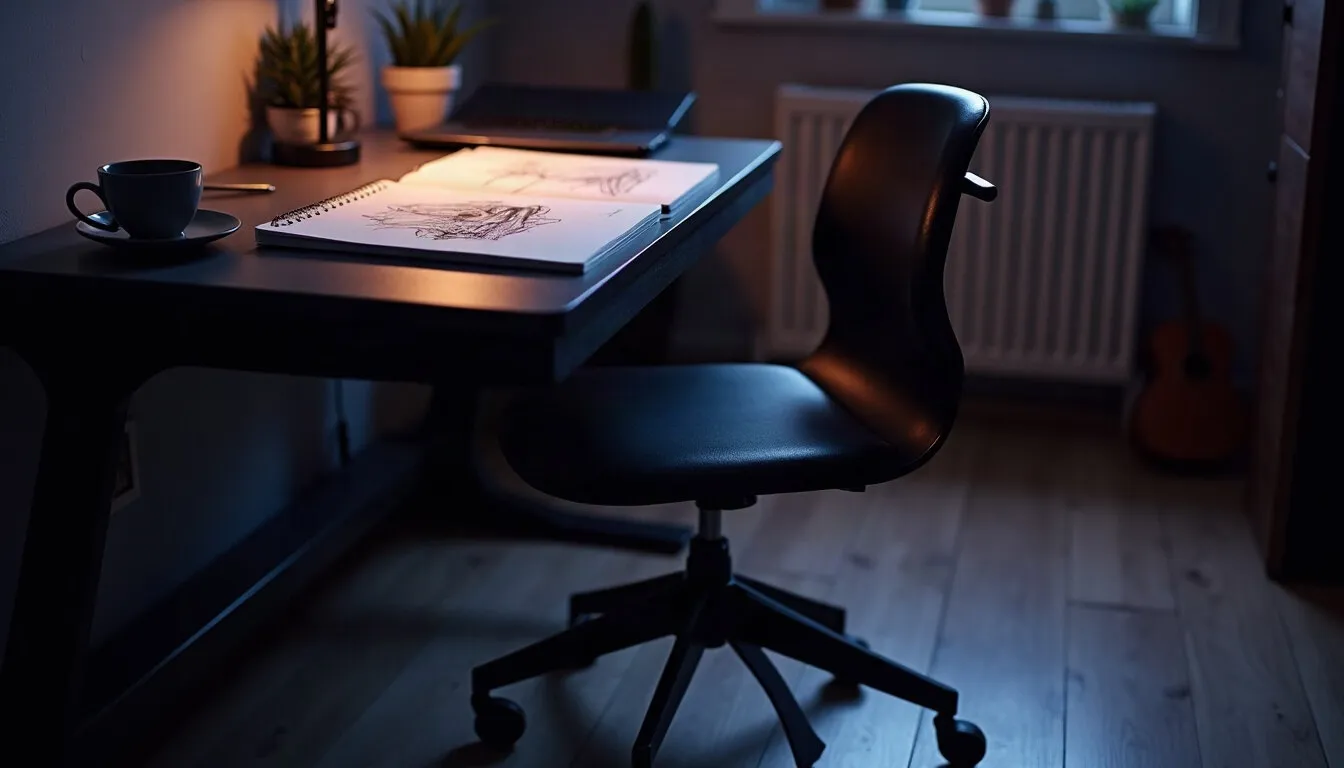
The first thing I noticed in my friend's spare room was the sound. Every time she leaned back from her pen display, the chair crunched across old carpet, stuck, then lurched. She had moved her studio there for the quiet, and the floor was the loudest thing in it.
Floors are easy to ignore when you draw, but they decide how your chair moves, how lamp light bounces and what happens when a water jar tips. If you are redoing a room in Colorado, a local company offering vinyl floor installation in Denver can help you weigh the options for a space like this. Here is what I would think about first, before any samples come home.
The floor is part of your drawing setup
A drawing corner asks a strange set of things from a floor. It has to take a rolling chair moving back and forth in the same small patch all day. It has to survive the occasional dropped stylus, spilled tea or rinse water if you still paint with real brushes some days. And it has to stay quiet, because a creaky or crunchy floor is surprisingly tiring when you are concentrating on a line.
Then there is light. A floor is a huge surface, much bigger than your desk, and it reflects whatever light hits it back up into the room. A very glossy floor under a desk lamp can throw a soft glare onto a glossy screen. A strongly colored floor, like a warm orange wood tone, tints the bounce light a little, and you may feel it when you judge skin tones on screen late at night.
So the big questions are simple: how does the chair move, how does the floor handle spills, how loud is it, and what does it do to the light. Everything else is taste, and taste is allowed.
Choosing a surface that suits a rolling chair
Carpet is cozy, but it fights a desk chair. The casters dig in, the pile wears into a bald patch, and most people end up buying a plastic chair mat that slides around and cracks at the corners. Hard floors let the chair roll freely, and this is where luxury vinyl plank and hardwood come into the conversation.
Vinyl plank tends to appeal to people who draw because it is quiet underfoot, copes well with spills, and comes in matte finishes that do not shine back at the lamp. Hardwood has a warmth that is hard to argue with, and many people love drawing in a room with real wood under their feet. Hardwood does want a little more care around water, and chair casters can mark softer woods over time, so a felt or rubber caster set and a small rug outside the rolling zone are common fixes.
A quick chair test
Before you pick anything, sit at your desk and roll the way you actually work. I did this in my own corner with a piece of masking tape. I stuck one strip where the chair sits when I am drawing and another where it ends up when I lean back to look at the whole canvas. Mine were about 30 inches apart, and the side-to-side drift was about 24 inches. That small rectangle, roughly 30 by 24 inches, is where the floor takes almost all the wear.
Knowing that patch changes the conversation. You can ask how a surface handles concentrated rolling in one spot, you can plan where a rug can go without catching the casters, and you can see whether the desk sits across a seam or a doorway transition that will bump the chair every time.
Pressure check
- Light touch: tape out your rolling zone and look at it for a day.
- Press firmly: choose a surface the chair can roll on without a mat, so the patch under you stays even.
- Lift off: worrying about the exact plank width; your chair will never notice it.
Thinking about light, color and sound together
This is the part most people skip, and it is the part that matters most for color work. Stand in your drawing spot at the time of day you usually draw. For me that is after dinner, with one warm lamp on the desk and the overhead light off. Look down. If you can see a bright smear of the lamp reflected in a floor sample, imagine that smear on a much bigger scale, bouncing toward your screen.
Matte or low-sheen finishes help a lot here. Mid-tone floors, not very pale and not very dark, also tend to be easier to live with. A very pale floor bounces a lot of light up, which can make a dim screen feel washed out. A very dark floor soaks up light and can make the corner feel like a cave, so you end up turning the screen brightness higher than it needs to be.
Sound is the third piece. Hard floors can sound clicky, and a room with bare walls and a hard floor can echo a little when you are on a video call with a client or just listening to music while you work. A good underlayment, chosen by the installer for the room, makes a real difference to how quiet the floor feels. So does a rug placed outside the chair zone, under a reading chair or by the door.
Bringing samples to the desk
Here is a small check I like. Take two or three floor samples and put them on the floor under your desk at night, with your usual lamp on. Open a gray canvas on your screen, a plain mid-gray, and look at it for a minute. Then glance down at each sample and back up. If one sample makes the gray look warmer or brighter in your peripheral vision, that floor is talking to your colors. Better to know before it covers the whole room.
Pressure check
- Light touch: look at samples under your own lamp, at your own drawing hour.
- Press firmly: favor a low-sheen finish in a calm mid-tone near the desk.
- Lift off: matching the floor to your art supplies or your favorite palette.
The details that make a drawing room easier to live in
A few smaller things come up once the floor is down, and it helps to think about them early.
Transitions between rooms matter if your chair ever travels. If you roll from the desk to a bookshelf or a printer in the next room, ask the installer about the smoothest possible threshold. A small lip that does not bother your feet will catch a caster every single time.
Cables are another one. If you have a desktop computer on the floor, a pen display, a second monitor and a lamp, the floor around the desk turns into a little nest. A cable tray screwed under the desk keeps it off the floor, which protects both the cables and the surface. Anything to do with new outlets or wiring is a job for an electrician, not the flooring crew and not you.
Climate is the last piece. Colorado is dry for much of the year, with cold, snowy winters, and wood in particular moves with the seasons. That is one reason people in dry climates often ask installers about acclimating materials before they go down and about leaving the right gaps at the walls. You do not need to know the details yourself. You just need to ask the question and listen to how the installer explains it.
If you also work with traditional media, think about where the water jar lives. A small washable mat under the painting side of the desk takes the drips, and it can be lifted and rinsed in the sink. That one habit protects any floor, vinyl or wood, and it keeps you from flinching every time the brush taps the jar.
Pressure check
- Light touch: add a washable mat where the water jar sits.
- Press firmly: ask about the threshold if your chair crosses into another room.
- Lift off: hiding every cable perfectly; off the floor is good enough.
Before you put the pen down
A floor will not make your line work better, but a bad one makes every session a little harder: the stuck chair, the glare, the squeak, the nervous glance at the water jar. A good one disappears. You stop thinking about it and the drawing gets your full attention again.
Tonight, before you close the laptop or turn off the display, grab a roll of tape and mark your chair's rolling zone. Leave it there for a few days. When you start talking to anyone about a new floor, that little taped rectangle will tell them more about how you work than any description could.

Yuna Castellan
Yuna paints mostly on an iPad, on trains, at kitchen tables and in cafes. She covers mobile drawing, brushes, screen films and getting a stylus to feel like something you want to hold.
More from the same shelf
Preparing digital art files for prints, step by step
Color profiles, soft proofing, CMYK, bleed and test prints, in the order I do them, so the print that arrives looks like the painting you made on screen.
Open the piece →
What your studio walls are doing to your colors
A colored wall tints how you judge color on screen. Run a simple gray-step test, then pick a neutral, low-glare finish for the wall behind your desk.
Open the piece →
Sharing a garage studio with an electric car charger
How to map a garage studio before an EV charger goes in, what to tell the electrician about your gear, and the habits that keep the room usable.
Open the piece →